There is a moment in life when you realize the problem you keep running into has followed you everywhere.
A bad relationship.
A falling-out.
A job that always becomes stressful.
A friendship that always ends with you feeling misunderstood.
A project that starts with excitement and ends with you feeling trapped.
And after a while, you start to notice something uncomfortable.
The people change.
The places change.
The situation changes.
But somehow, the same thing keeps happening.
At some point, you have to ask:
“What if I’m part of this?”
Support the newsletter --->
98% of your website visitors leave without saying a word.
You pay to get people to your site. Most of them look around, don't fill out anything, and vanish. Your analytics can tell you a session happened.
It can't tell you who it was, and it definitely can't email them. LeadPost closes that gap.
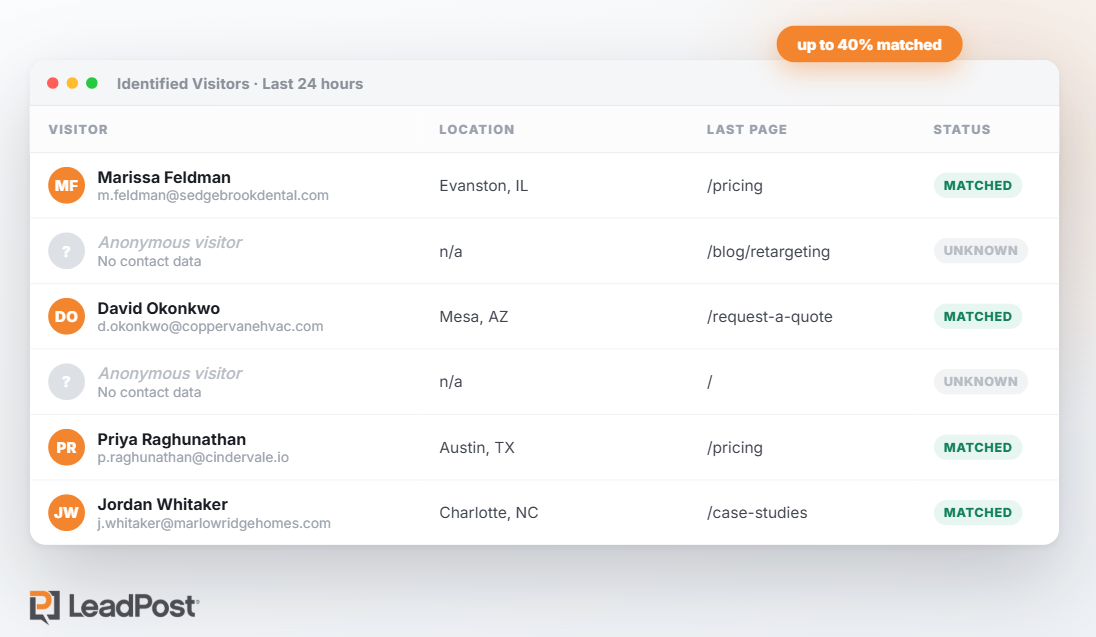
Add one line of code and it identifies up to 40% of your anonymous traffic with verified names, emails, and mailing addresses, with no form required, then syncs them into HubSpot, Salesforce, Klaviyo, or wherever you already work.
Business Brief readers can turn it on free for 14 days. No credit card, no sales call. Install the tag and see who's been showing up all along.
DISCLAIMER
14-day free trial, up to 200 leads. No credit card required. U.S. website visitors only. Works best on sites with at least 1,000 unique monthly visitors.
That question is not very pleasant.
It is much easier to believe that everyone else is the problem.
This person didn't understand you.
That person was selfish.
Your boss was impossible.
Your friends didn't support you.
The timing was bad.
You were unlucky.
Sometimes those things are true.
People can hurt you.
People can let you down.
You can absolutely end up in situations that aren't your fault.
But there are also times when the same problem keeps appearing because you're bringing the same habits into every new situation.
Maybe you avoid difficult conversations until the other person finally gets tired.
Maybe you say yes when you mean no, then get angry that nobody notices how much you're doing.
Maybe you expect people to know what you need without telling them.
Maybe you leave as soon as something gets uncomfortable, then wonder why nothing ever lasts.
Maybe you keep choosing people who give you very little and calling it bad luck.
Maybe you don't trust anyone, then feel lonely because nobody gets close.
These things are harder to see because they don't look like big mistakes.
They look like little choices.
But little choices repeated for years become a life.
The strange thing about self-awareness is that it can feel worse before it feels better.
Because once you see your part, you can't completely blame everyone else anymore.
You have to admit:
“I do this.”
“I shut down.”
“I avoid this.”
“I choose this.”
“I keep going back.”
And that can hurt.
But it is also the first useful kind of control you get back.
Because you cannot change the person who disappointed you.
You cannot change what your family taught you.
You cannot change how someone treated you five years ago.
You cannot change every unfair thing that happened.
But you can change what you do next.
You can learn to say no before you become resentful.
You can speak before you explode.
You can stop chasing people who keep showing you they don't want to be there.
You can stay in a hard conversation instead of disappearing.
You can admit when you were wrong without turning it into a fight.
You can stop waiting for someone else to make the first move.
And maybe most importantly, you can stop telling the same story about yourself.
“I’m just bad at relationships.”
“I always mess things up.”
“People always leave.”
“Nothing ever works for me.”
Be careful with those sentences.
Sometimes a painful pattern can start sounding like a personality.
It isn't.
A pattern is something you repeat.
And anything you repeat can, at least in part, be changed.
That doesn't mean taking responsibility for things other people did.
It means taking responsibility for the part that is actually yours.
That's a very different thing.
You don't have to hate yourself to admit that you've been the difficult one sometimes.
You don't have to punish yourself for mistakes you made when you didn't know better.
You just have to be honest enough to stop protecting the version of yourself that keeps creating the same problem.
So think about the last few things that went wrong in your life.
Then ask yourself something you may not like:
“What part of this keeps showing up because I keep bringing it with me?”
Don't ask it to blame yourself.
Ask it because your life gets more interesting the moment you realize you have some say in what happens next.
Sometimes the most important change is not getting better people, a better job, or better luck.
Sometimes it is becoming a little different person when the same situation comes around again.